Key points
- Airbnb ranks listings on quality, popularity, price and location. Booking looks mainly at conversion, price, cancellations, reviews and content quality.
- The cover photo and title win the click. The total price, not the nightly rate, decides the comparison.
- More open dates, fewer stay restrictions and quick replies put you in front of more searches.
- Reviews and reliability (almost never cancelling) are what hold your position over time.
Every week we review listings from owners who tell us the same thing: the flat is nice, the area is good, but bookings don’t come, or they come at a price that isn’t worth it. It is rarely a single problem. Usually it’s a cover photo that doesn’t stand out in search results, a title written from the owner’s point of view, a price that looks expensive once fees are added, and a calendar full of restrictions that keeps you out of many searches.
This guide brings together what the platforms themselves say about how they rank results and what we apply when we optimise a listing. It is written for Airbnb, but nearly all of it works the same way on Booking.
What Airbnb’s algorithm looks at
Airbnb doesn’t publish its formula, but it does explain which factors carry weight. Its help centre boils them down to four1:
| Factor | What Airbnb says | What you can do |
|---|---|---|
| Quality | Listings with better ratings and reviews tend to rank higher. | Careful photos, an accurate description and a stay worth five stars. |
| Popularity | How often the listing is booked, viewed and saved to wish lists2. | A cover photo and title that earn the click. |
| Price | Listings priced below comparable ones in the area tend to rank higher. | A competitive total price, tuned to the demand on each date. |
| Location | Listings in places guests like to stay tend to rank higher. | You can’t move it, but you can explain its advantages well. |
Airbnb also lists what hosts control directly: calendar availability, the quality of photos and videos, sought-after amenities, hospitality (measured with the Superhost criteria: cancellations, responsiveness and ratings), Instant Book, and how quickly you reply and how often you decline requests1.
Two badges worth knowing
Guests can filter for Superhost listings2, and the Guest favourite badge is highlighted in search results. Neither is required to list, but both reward the same thing: excellent reviews and no surprises.
And Booking: conversion, price and cancellations
Booking is more explicit. Its partner help centre points to five levers for better ranking: conversion (bookings relative to views of your page), average daily rate, cancellations in the last 90 days, your property page score (photos, descriptions and facilities) and your guest review score5. You can track all of them in the extranet’s visibility dashboard, which also compares your Booking price with the one you show on other channels6.
Booking also runs a Preferred Partner programme that gives extra visibility in exchange for a slightly higher commission7. It can pay off in low season or in very crowded markets, but it doesn’t replace the basics: if your page doesn’t convert, you’ll pay more commission for views that never book.
The idea behind both platforms: they earn a commission per booking, so they show first what they believe will be booked and leave the guest happy. Anything that makes your listing convert better and earn better reviews moves you up.
Photos: the cover wins the click
In search results you compete with a thumbnail, a title and a price. The cover photo is the first thing people see and, in our experience, it’s the change that shows up fastest in listing views. Airbnb gives clear technical guidance8:
- Landscape photos of at least 1200 × 800 pixels. Search results crop them into squares, so keep the main subject centred.
- Natural light, no flash. Open blinds and curtains; if it’s still dark, turn the lights on.
- Keep the camera level, without tilting it up or down, so vertical lines stay straight.
- A mix of wide, mid-range and detail shots, with captions explaining what the photo doesn’t show.
Here are three real jobs, made from the photos the owner sent us, without visiting the flat:
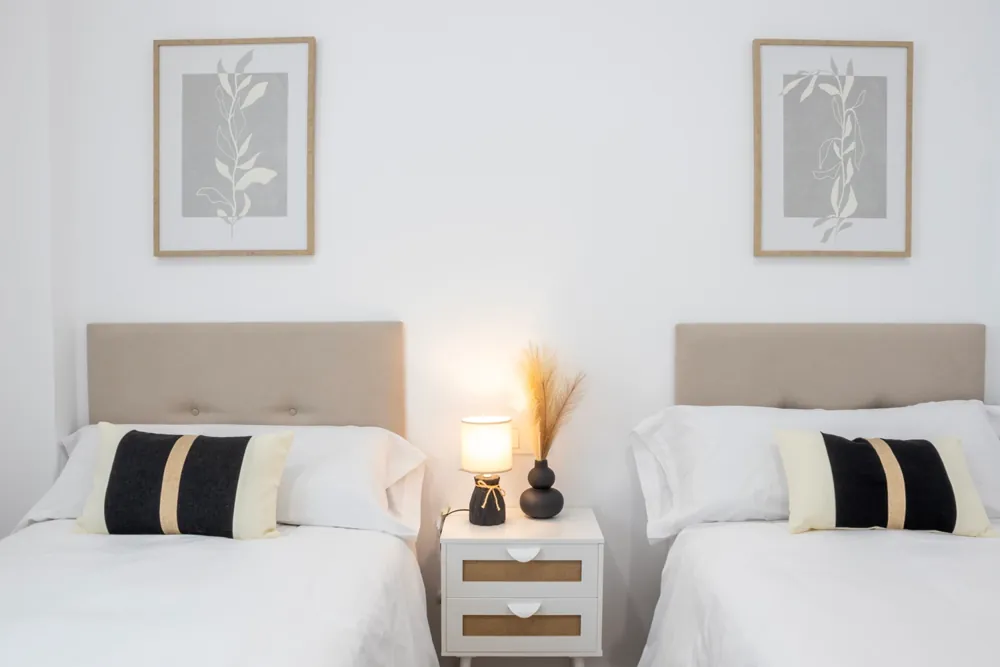
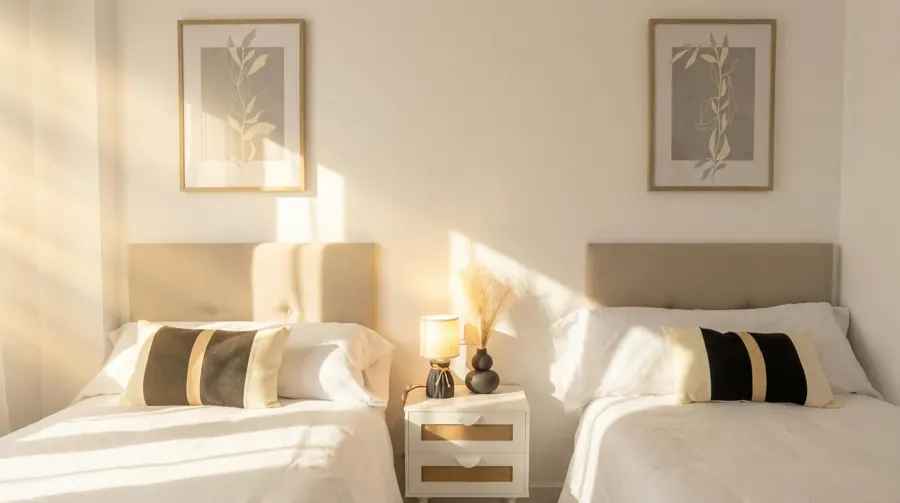
Twin bedroom: colour temperature, light and whites. Same furniture, same room.
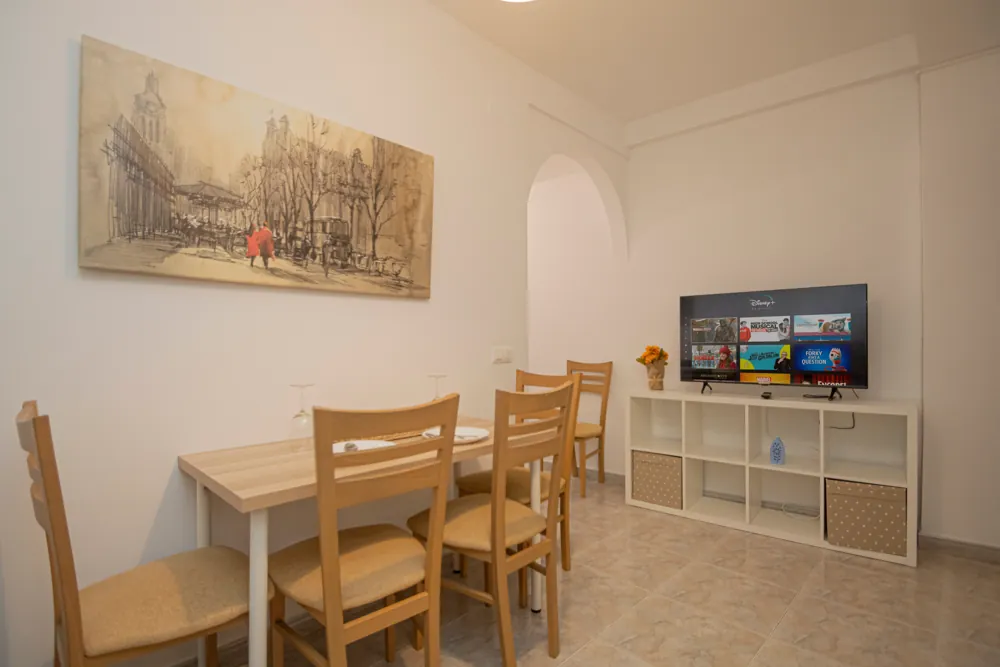
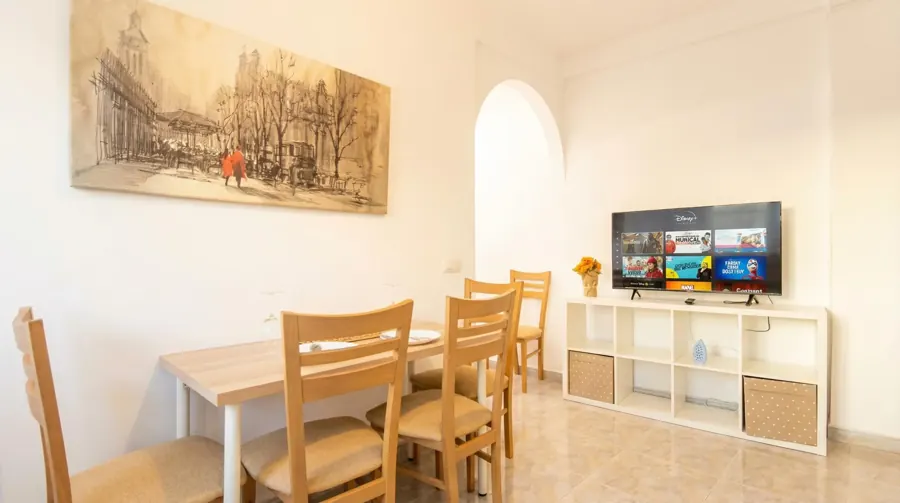
Living and dining room: exposure, colour and perspective correction.
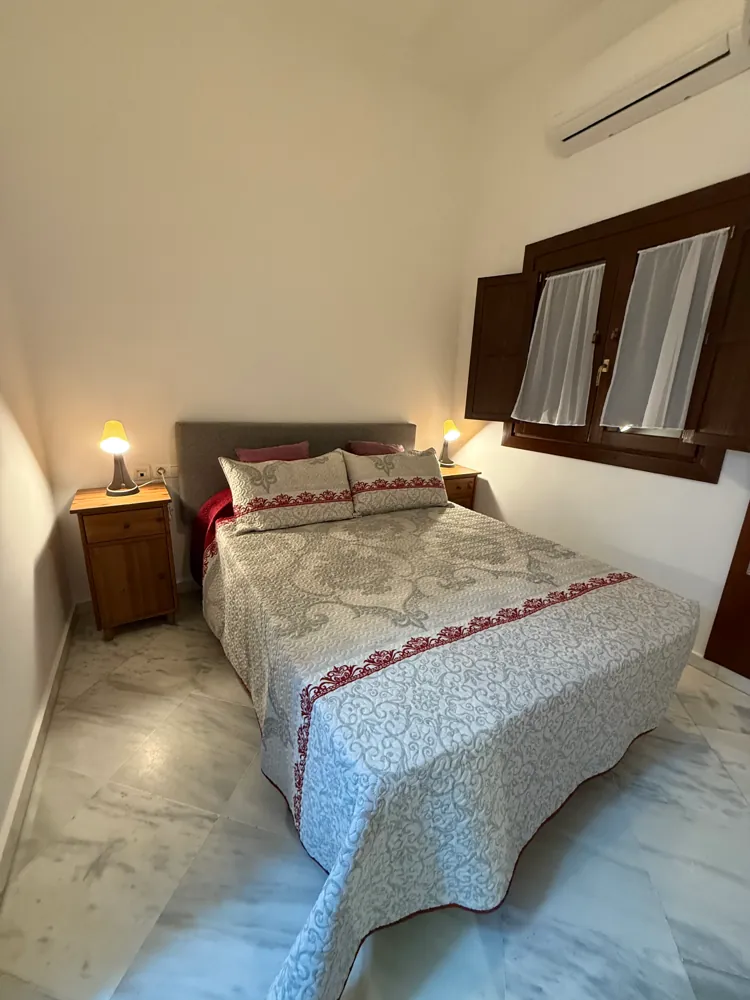
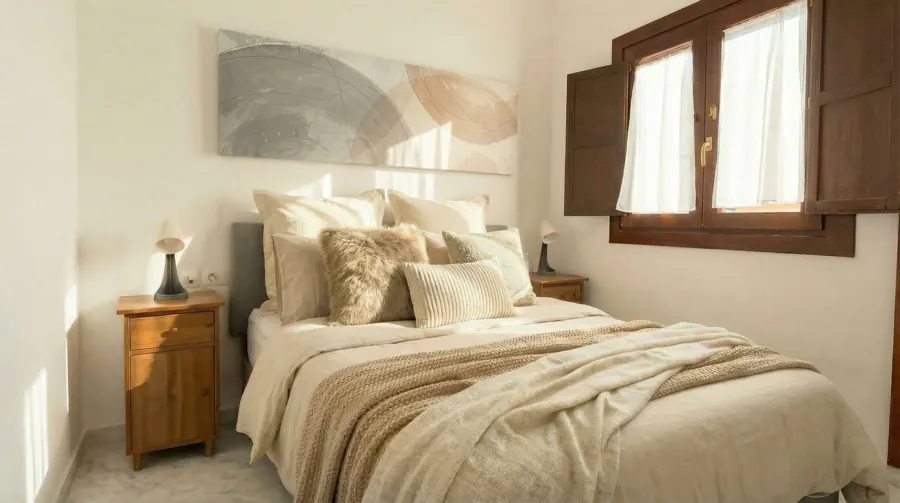
Main bedroom: landscape format, light and virtual styling (bedding, cushions and artwork).
Improving is not inventing. Accuracy is one of the ratings guests give and one Airbnb considers for the Guest favourite badge3. If a photo includes styling the flat doesn’t have, as in the third example, those textiles and that artwork must be in the property before you publish it. A “didn’t look like the photos” review costs more than any improvement.
Gallery order matters too. Our usual sequence: a cover with the most distinctive feature (terrace, views or the brightest living room), then the main bedroom, the other rooms in the order you walk through the flat, bathroom and kitchen, and finally the building and the neighbourhood.
Title and description: write for the person searching
Airbnb recommends titles under 50 characters, with the most important information first because they get shortened on small screens. It also asks you to avoid emojis, repeated symbols and capitals: capitalise only the first letter of the first word9.
Weak title
Beautiful Bright Apartment In The Centre!!
Every flat is described as beautiful and bright. It doesn’t say what makes it different, and the capitals and exclamation marks undermine trust.
Optimised title
Penthouse with terrace, 5 min to the Cathedral
46 characters. It opens with the type of property, names the feature that sets it apart and gives a location landmark guests recognise.
For the description, Airbnb asks for what works in practice: specific details that make clear what the guest will find2. The app only shows the first few lines before “Show more”, so use them for the essentials:
First sentence: who it’s for and why
“Two-bedroom penthouse with a private terrace, designed for couples and families who want to explore the old town on foot.”
Three facts that remove doubts
Real walking distances, bed types, and whether there’s a lift, air conditioning or parking.
The space, room by room
In the space section, describe each room and what’s in it. No empty adjectives.
What’s worth knowing before booking
Stairs, street noise, building rules. Flagging them up front prevents bad reviews.
Pricing: you compete on the total, not the nightly rate
This is the mistake we see most. Airbnb ranks using the total price before taxes, including fees and discounts2. A high cleaning fee can make a flat that is cheap per night look expensive for a two-night stay, which hurts it against comparable listings.
Fixed price
- The same rate on a Tuesday in February as on a bank holiday weekend.
- Leaves money on the table on high-demand dates.
- Leaves nights empty in slow weeks.
- Nobody reviews it until bookings drop.
Dynamic pricing
- Goes up with demand: weekends, holidays, events.
- Comes down in a controlled way to fill nearby gaps.
- Never goes below a minimum you set.
- Adjusts every day using data from your market.
Dynamic pricing tools do this every day based on demand in your area. Don’t obsess over which tool: what makes the difference is setting it up properly (base price, minimum, weekend uplifts and rules for last-minute dates) and reviewing it every season. Add weekly and monthly discounts if you want longer stays.
If you’re not sure what range you should be in, our revenue estimator compares your property with listings in your area.
Calendar and restrictions: show up in more searches
The more open your calendar, the more searches it matches. Airbnb says so directly and recommends reducing restrictions such as minimum and maximum stay lengths2. Booking takes the same line, advising you to load availability 12 months ahead and stay flexible with restrictions5.
- Open your calendar at least 12 months ahead.
- Use minimum stays wisely: higher in peak season and at weekends, lower to fill gaps between bookings.
- Check advance notice and preparation days between bookings. Every unnecessary block takes you out of searches.
- Sync calendars across platforms so you never have to cancel over a double booking.
Amenities: filters rank you too
Many guests filter before they browse. Airbnb gives high-speed wifi, self check-in and free parking as examples of amenities guests want2, and says that adding sought-after amenities improves visibility1. Tick everything you have and consider what you’re missing:
- Self check-in with a smart lock or key box.
- Fast wifi and a workspace if you want to attract work stays.
- Air conditioning, essential in southern Spain in summer.
- A cot and high chair if your flat suits families. They cost little and unlock a whole filter.
Reviews and hospitality: what holds your position
Reviews take the longest to build and do the most to protect your position. The Superhost and Guest favourite criteria show what Airbnb values: an average of 4.8 or more, replying to 90% of messages within 24 hours and cancelling fewer than 1% of bookings4, plus high marks for cleanliness, accuracy and communication3. On Booking, cancellations over the last 90 days and your review score feed directly into your ranking5.
- Send a clear arrival guide with photos of the entrance and the lock.
- Hotel-standard cleaning: it’s the rating that hurts most when it slips.
- Reply quickly, including to enquiries that don’t turn into bookings.
- Don’t cancel. If you can’t guarantee a date, block it in advance.
Should you turn on Instant Book?
For most flats, yes. According to Airbnb, Instant Book improves your response rate, which can improve your placement, helps you reach Superhost status, and guests can filter for listings that offer it10. Its help centre also notes that listings that can be booked instantly may rank higher because responses are automatic1.
If you’re worried about who stays in your home, you can set guest requirements, such as positive reviews from other hosts10, and make your house rules clear in the listing.
A 20-point checklist for your listing
Go through it with your listing open. Every point you miss is an opportunity:
- The cover photo shows the flat’s most distinctive feature and still works cropped to a square.
- All photos are landscape, bright and with straight verticals.
- There’s at least one good photo of every room, including bathroom and kitchen.
- The gallery follows the natural route through the property.
- Photos have captions explaining what can’t be seen.
- Nothing in the photos differs from what the guest will find.
- The title is under 50 characters and leads with what matters.
- The title has no emojis, capitals or exclamation marks.
- The first sentence of the description says who the flat is for and why.
- The description gives real distances, bed types and key equipment.
- You flag stairs, noise or rules before the guest books.
- Every amenity you have is ticked.
- You offer self check-in or a simple arrival process.
- You know the total price guests see for two and for seven nights.
- Your cleaning fee doesn’t inflate the price of short stays.
- You use dynamic pricing with a defined minimum price.
- Your calendar is open at least 12 months ahead.
- Your minimum stay changes with the season and to fill gaps.
- Instant Book is on, with sensible guest requirements.
- You reply within 24 hours and never cancel bookings.
If your listing already ticks almost everything and still lost bookings, read why your listing is losing visibility: sometimes the issue is local competition or a long pause in your calendar.
Want to know what your listing is missing?
Send us your Airbnb or Booking link. Within 24 hours we’ll tell you, point by point, what we’d change in your photos, copy and pricing, and how much you could earn. Free, no commitment.
Frequently asked questions
How long does it take for an Airbnb optimisation to show results?
Views and clicks change first, usually within the first few weeks, because the cover photo, title and price are visible from day one. The effect on bookings and revenue depends on the season and your area, and new reviews take longer to build up.
Is cutting the price the quickest way to rank higher?
Price matters, but Airbnb compares it with listings with similar features and weighs it alongside quality. Cutting your rate without improving photos, title and reviews usually brings bookings at a price that isn’t worth it. It works better to adjust the total price, review your cleaning fee and use dynamic pricing.
Can I use photos that are edited or generated with AI?
Editing light, colour, perspective and framing is good practice and Airbnb recommends it. What you must not do is show something the flat doesn’t have: accuracy is one of the ratings guests give. If you use virtual styling, make sure the real property matches it.
Does what works on Airbnb also work on Booking?
In essence, yes: good photos, complete content, a competitive price, availability and good reviews. Booking puts more explicit weight on conversion and cancellations, and lets you buy extra visibility through a higher commission with its Preferred Partner programme.
Is it worth becoming a Superhost?
Yes, although it isn’t essential. Guests can filter for Superhosts, and the criteria it requires (high ratings, quick replies and almost no cancellations) are the same ones the algorithm considers. If you get those right, the badge follows.
Sources
- Airbnb Help Centre. How search results work.
- Airbnb Resource Center. How search works on Airbnb.
- Airbnb Help Centre. Guest favorites: most-loved homes according to guests.
- Airbnb Help Centre. What’s required to be a Superhost.
- Booking.com for Partners. Basics for improving ranking.
- Booking.com for Partners. What is the Visibility Dashboard?
- Booking.com for Partners. All you need to know about the Preferred Partner Program.
- Airbnb Resource Center. How to take great photos for your listing.
- Airbnb Resource Center. Guidelines for writing your listing title.
- Airbnb Help Centre. How Instant Book works.
Reviewed on 25 September 2026. Platforms change their criteria often; we always link to the official source.